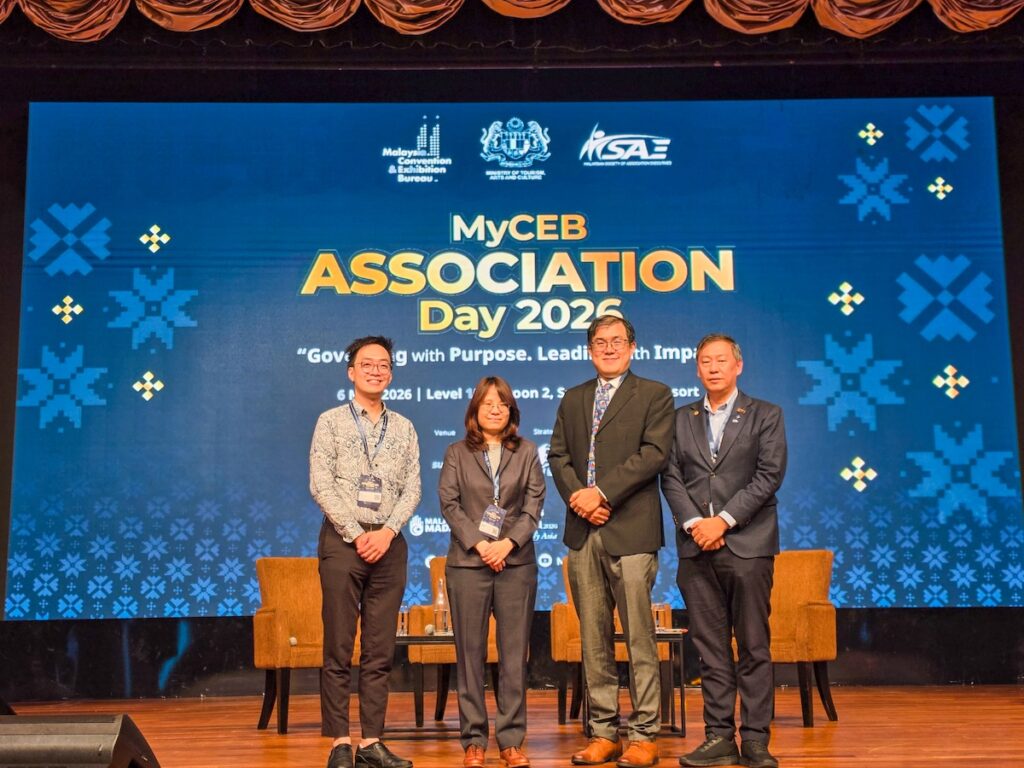
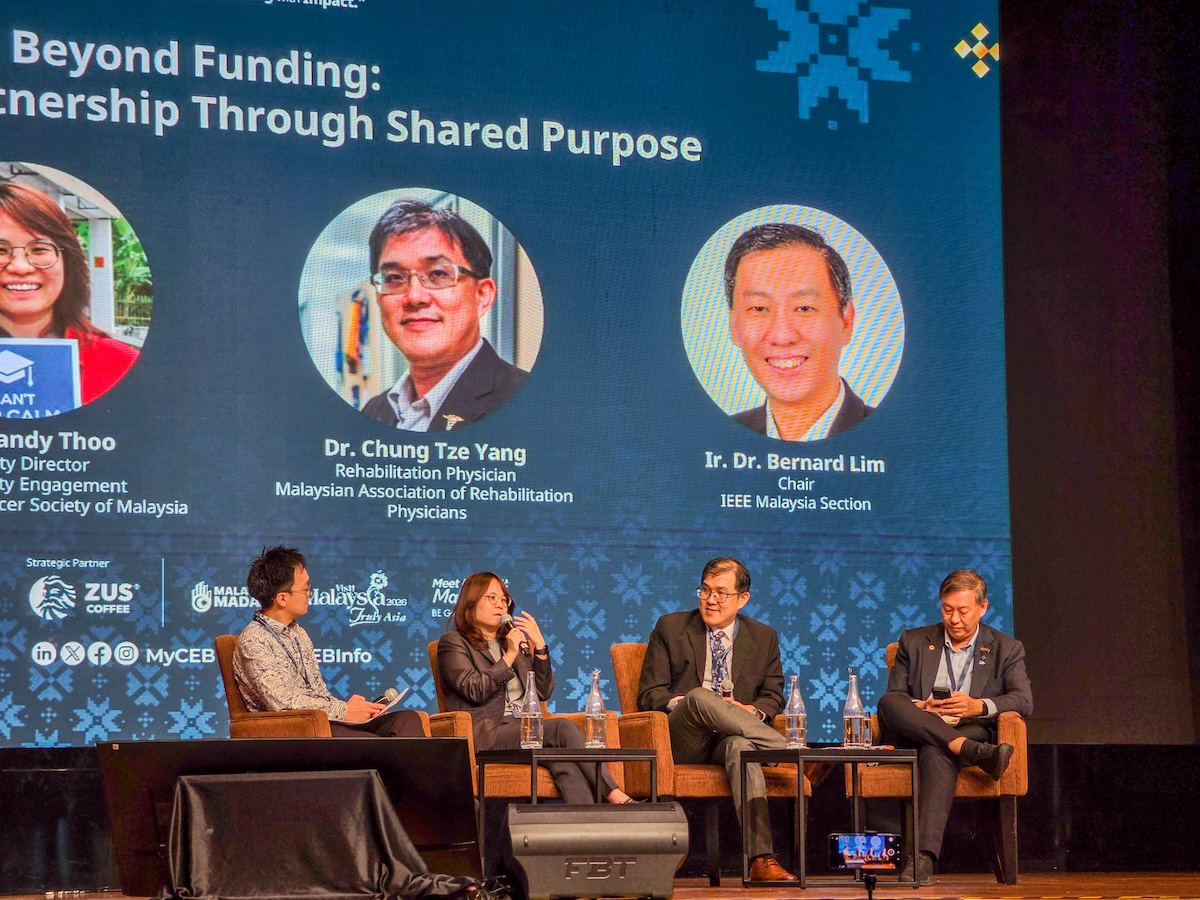
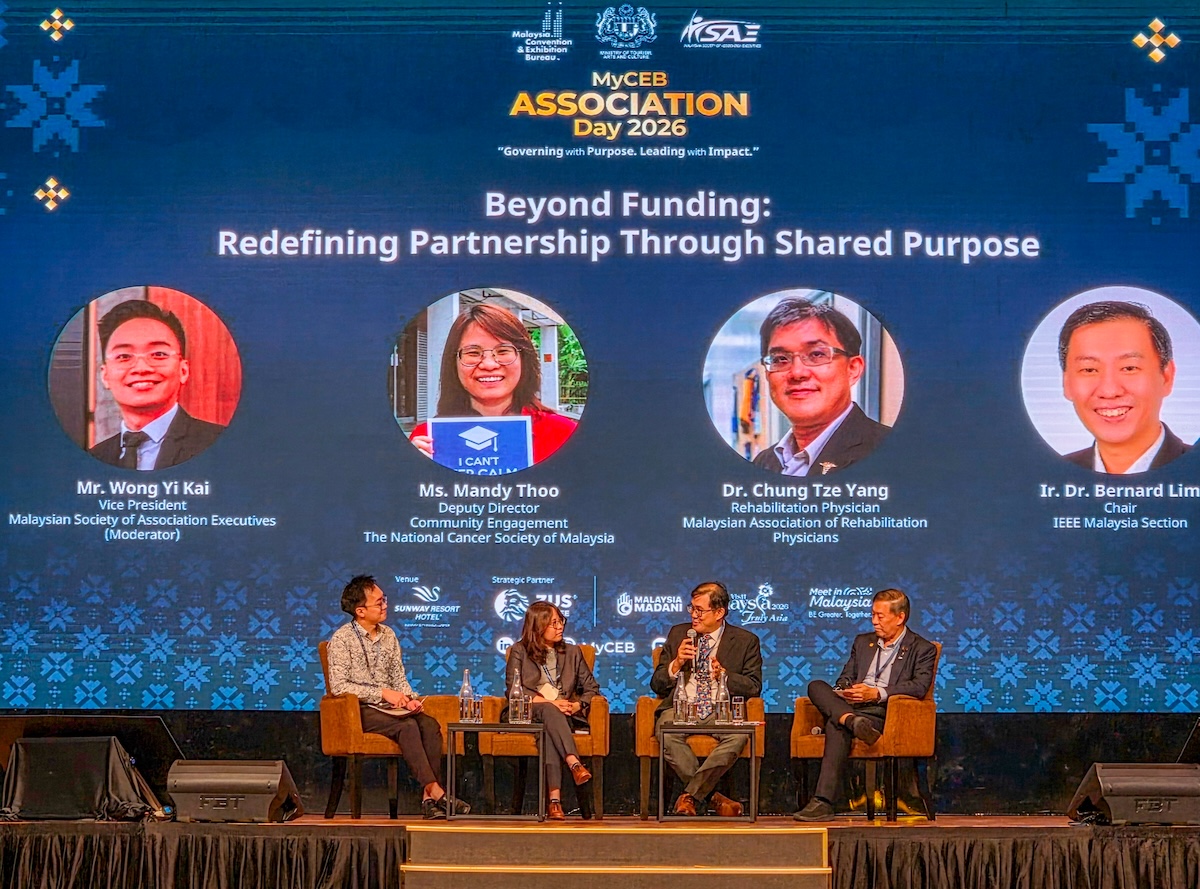
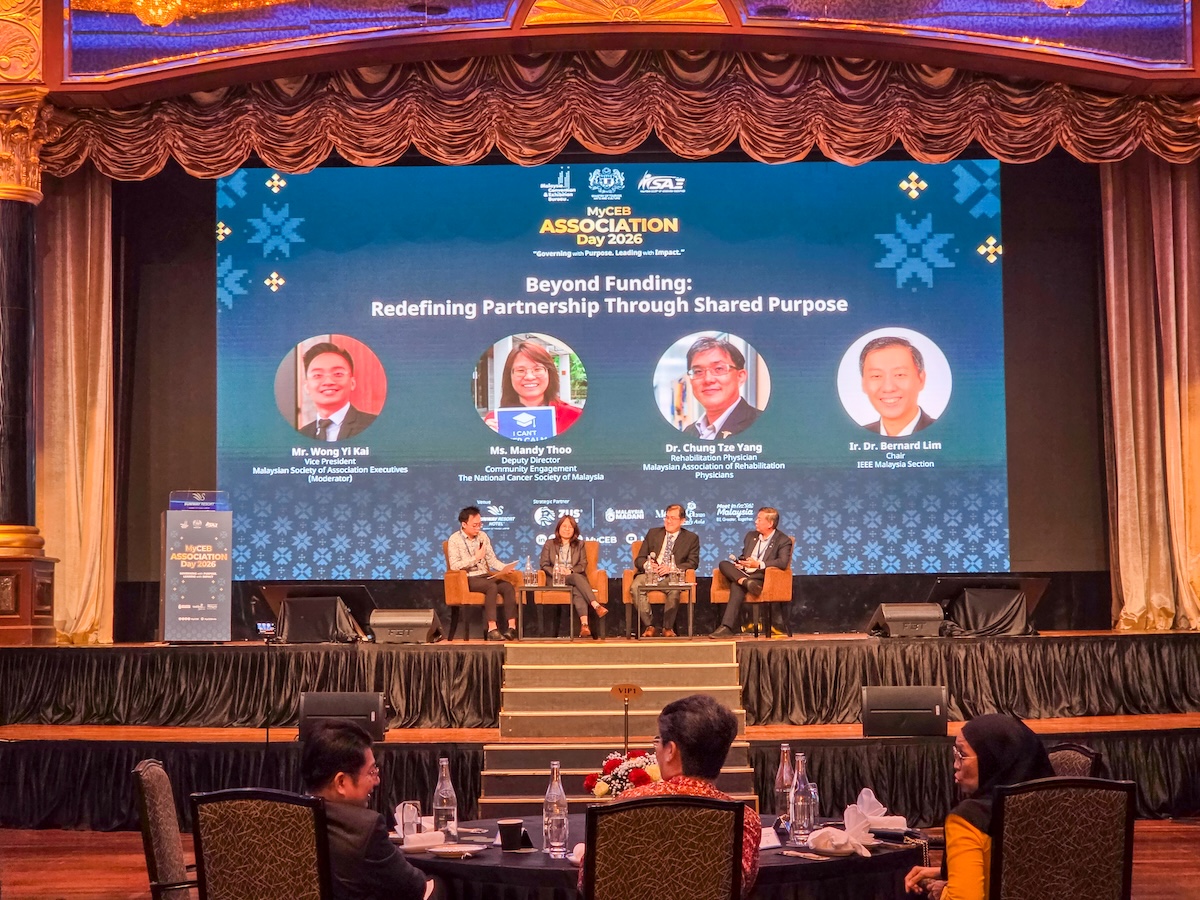
At the final panel session, “Beyond Funding: Redefining Partnership Through Shared Purpose”, speakers explored how associations can move beyond transactional sponsorships and build collaborations grounded in long-term impact, shared values and measurable outcomes.
Moderated by Mr. Wong Yi Kai, Vice President of the Malaysian Society of Association Executives, Senior Lecturer and Chiropractic Programme Director at IMU University, and President of the Association of Chiropractic Malaysia (ACM), the session brought together leaders from public health, rehabilitation medicine and engineering to examine how purpose-driven partnerships can strengthen associations, communities and industries alike.
The discussion highlighted a growing shift in how partnerships are viewed today. Rather than focusing solely on sponsorship visibility or short-term event support, associations are increasingly looking at how partnerships can contribute to sustainable systems, infrastructure, innovation and social impact.
Purpose-Driven Partnerships for Lasting Impact
Key Takeaways from the Panel Session
Sharing the public health perspective, Mandy Thoo, Deputy Director of Community Engagement at the National Cancer Society of Malaysia (NCSM),
emphasised that meaningful partnerships begin with understanding shared values and long-term goals. Drawing from NCSM’s work in cancer prevention, screening and patient support, she explained how the organisation has evolved from programme-based sponsorships towards building long-term ecosystems together with partners.
Instead of simply seeking event funding, NCSM now works closely with organisations to identify where they can contribute meaningfully across the broader healthcare journey. This includes supporting mobile screening programmes, medical equipment, financing solutions for patients, digital health systems and Malaysia’s National Cancer Screening Registry.
She noted that while short-term measurable outcomes are often prioritised, the true value of partnerships lies in creating lasting behavioural, health and socioeconomic impact beyond the duration of a campaign or event.
From Sponsorship to System-Building Partnerships in Healthcare
Partnerships must go beyond event sponsorships towards long-term systems and infrastructure development.
Effective collaboration begins with aligning on shared value, impact and mutual priorities.
Sustainable partnerships are driven by shared goals rather than short-term visibility or campaign outcomes.
National Cancer Society of Malaysia (NCSM) is shifting from programme-based funding to co-creating healthcare ecosystems, including screening initiatives, digital systems, and patient support solutions.
True partnership success is measured by lasting health, behavioural, and socioeconomic impact beyond project timelines.
Dr. Chung Tze Yang, Chair of the AOC PRM 2025 Organising Committee and representative of the Rehabilitation Physician Malaysian Association,
shared how partnerships have played an important role in advancing rehabilitation medicine and improving support for persons with disabilities in Malaysia. Representing a relatively young association with fewer than 200 members, he highlighted how collaborations across healthcare, technology and industry have enabled rehabilitation physicians to expand both advocacy efforts and clinical innovation.
He reflected on the evolution of rehabilitation conferences over the years, where partnerships have shifted from conventional sponsorships towards collaborations involving assistive technologies, robotics and advanced rehabilitation systems. However, he stressed that technology alone is not the solution and that human-centred care remains essential.
The discussion also touched on the importance of universal accessibility, inclusive healthcare systems and financing models that allow innovative rehabilitation technologies to become more accessible to patients.
Advancing Rehabilitation Through Strategic and Inclusive Collaboration
Strategic partnerships have strengthened rehabilitation medicine, advocacy, and accessibility in Malaysia.
Collaboration across healthcare, technology, and industry is key to improving patient care and driving innovation.
Conferences now serve as platforms for industry collaboration and knowledge exchange, not just academic discussion.
While technology is transforming rehabilitation, human-centred care remains essential.
Inclusive healthcare systems require strong cooperation between associations, government, hospitals, and industry partners.
From the engineering and technology perspective, Ir. Dr. Bernard Lim, Chair of IEEE Malaysia Section,
shared how IEEE Malaysia Section approaches partnerships through its mission of “advancing technology for humanity.” He explained that collaborations today must align with broader national and societal goals, including innovation, talent development and economic contribution.
He highlighted how international conferences organised by IEEE Malaysia have gone beyond academic exchange to generate tourism, industry engagement, international visibility and economic impact for the country. By bringing together government agencies, academia, industries and professional communities, such events create platforms for knowledge sharing, collaboration and innovation.
Purpose-Driven Partnerships for Innovation and Societal Impact
Partnerships should align with a broader mission of creating societal and technological impact.
International conferences contribute to knowledge exchange, talent development, tourism, and economic growth.
Successful collaboration depends on alignment between academia, industry, government, and professional communities.
Shared purpose creates stronger and more sustainable partnerships than funding-driven relationships.
Technology and innovation partnerships must ultimately focus on improving lives and advancing society.
From the engineering and technology perspective, Ir. Dr. Bernard Lim, Chair of IEEE Malaysia Section,
shared how IEEE Malaysia Section approaches partnerships through its mission of “advancing technology for humanity.” He explained that collaborations today must align with broader national and societal goals, including innovation, talent development and economic contribution.
He highlighted how international conferences organised by IEEE Malaysia have gone beyond academic exchange to generate tourism, industry engagement, international visibility and economic impact for the country. By bringing together government agencies, academia, industries and professional communities, such events create platforms for knowledge sharing, collaboration and innovation.
Purpose-Driven Partnerships for Innovation and Societal Impact
Partnerships should align with a broader mission of creating societal and technological impact.
International conferences contribute to knowledge exchange, talent development, tourism, and economic growth.
Successful collaboration depends on alignment between academia, industry, government, and professional communities.
Shared purpose creates stronger and more sustainable partnerships than funding-driven relationships.
Technology and innovation partnerships must ultimately focus on improving lives and advancing society.
Overall Insights
Requirement for Successful Partnerships
Clear alignment of goals and values
Open discussions on mutual expectations and outcomes
Long-term commitment beyond individual events or campaigns
Cross-sector collaboration between associations, industry, academia and government
A focus on creating sustainable societal impact rather than short-term visibility alone
Final Takeaway
The panelists collectively agreed that one of the biggest barriers to meaningful partnerships is moving beyond short-term KPIs and transactional thinking. Instead, organisations must first identify common goals, define shared value and openly discuss what success looks like for all parties involved.
Mandy Thoo noted that one of the most effective ways to build stronger partnerships is through honest conversations about objectives and expectations. By understanding what matters most to each organisation, partnerships can evolve into long-term collaborations built on mutual benefit rather than one-sided support.
The session concluded with a strong reminder that partnerships today cannot be defined by funding alone. When organisations align around shared purpose, common values and long-term societal outcomes, collaborations become more impactful, sustainable and transformative.
The discussion reinforced that associations, industries, healthcare institutions and professional bodies all have a role to play in creating partnerships that not only support events and programmes, but also contribute meaningfully to community development, innovation and long-term progress.